ADA, Okla. – In May, the Comparative Vertebrate Anatomy class at East Central University went behind the scenes at the Oklahoma City Zoo’s Joan Kirkpatrick Animal Hospital for an immersive look at zoological medicine.
From routine dental care to advanced surgical procedures, they observed the complex clinical work that typically happens out of the public eye. This visit offered pre-vet students an invaluable perspective on the daily operations and diverse career paths available within a world-class veterinary team.
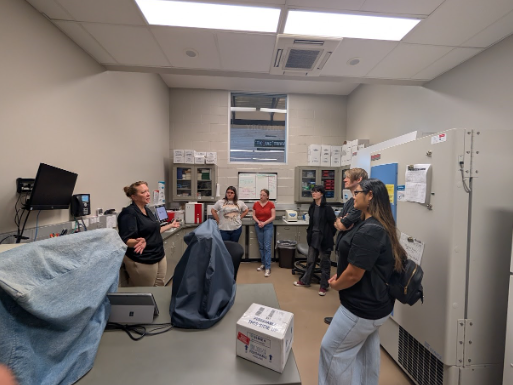
At 10 a.m., students and faculty were welcomed by Stephanie Johnson, vet technician, who provided a comprehensive overview of the zoo's animal screening protocols. These routine health checks are meticulously scheduled for every animal resident. For instance, the group learned that baby elephants are regularly screened for elephant endotheliotropic herpesvirus (EEHV), which can often be fatal *. The clinic is fully equipped to process most blood work and diagnostic tests in-house. A particularly fascinating takeaway was that among the big cats, lions are uniquely susceptible to canine distemper.
Following the tour, Dr. Taylor Novak discussed her fascinating work in zoo nutrition, where she designs diets that closely mimic the natural habits of each species. Managing what is essentially a high-tech culinary laboratory, her team utilizes massive walk-in refrigerators (separated for herbivores and carnivores) that resemble the pantry of a fine-dining restaurant. Beyond meeting basic nutritional requirements, Novak also studies animal behavior to adapt meals to specific behavioral needs. To conclude, she shared valuable advice with the students on navigating graduate school, specifically highlighting the importance of seeking out teaching assistantships and research grants.
In the other section of the hospital, Dr. Daniela Yuschenkoff provided a fascinating look at the clinical side of animal care, showcasing the advanced medical equipment used for diagnostics and treatment. Drawing on her years of veterinary experience, she explained how the team manages everything from routine vaccinations and blood draws to minor surgical procedures. She also discussed the complexities of monitoring animal pregnancies to ensure successful births, a timely topic, as the Zoo recently welcomed a new litter of Sumatran tiger cubs. Beyond clinical care, Yuschenkoff highlighted the Zoo's vital conservation initiatives, which range from local bird and Texas horned lizard surveys to international efforts protecting Sri Lankan elephant populations.
Jose Montalva from ECU’s Department of Biological and Environmental Sciences stated, “We would like to extend our sincere thanks to Liz McCrae, Stephanie Johnson, Robert Hayes, Dr. Cole, Dr. Howard, Dr. Sanchez, Dr. Yuschenkoff, Dr. Novak and Dr. Snyder for making this visit possible.”
Cutline: Stephanie Johnson speaking with to the ECU CVA class.
-ECU-