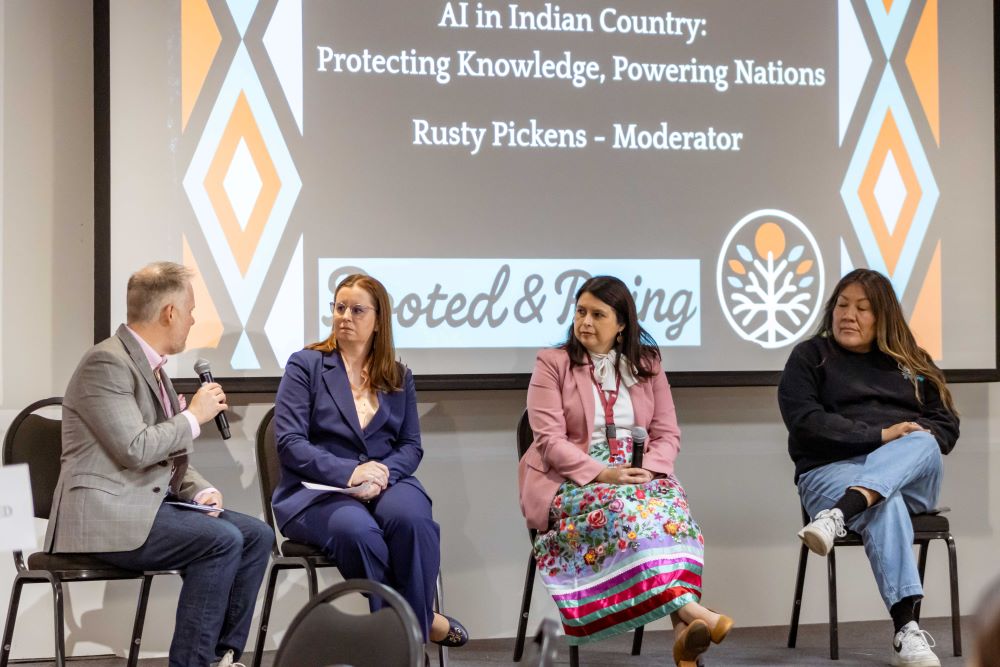
ADA, OK — East Central University hosted a panel titled “AI and Data Sovereignty” during its annual Tribal Education Summit in November, held in recognition of Native American Heritage Month.
The event brought together experts to examine how artificial intelligence is reshaping data governance, education and the protection of Indigenous knowledge.
The roundtable featured Paula Starr, Chief Information Officer for the Cherokee Nation; Deborah Ripley, Director of Quality Assurance for the Chickasaw Nation Department of the Treasury; and Dr. Amanda Tachine, a Navajo scholar and Assistant Professor at the University of Oregon. The discussion was moderated by Rusty Pickens, Computer Science Instructor and Founder of Native-owned technology firm, 580 Strategies.
Panelists outlined how Tribal Nations define and assert data sovereignty, identified areas where AI supports or pressures that sovereignty, and highlighted the need for education and workforce development aligned with Tribal values.
Starr emphasized the role of citizen-centered policy and strong digital infrastructure. Ripley addressed internal controls, data accuracy, and compliance challenges introduced by AI-driven systems. Tachine described how AI can misrepresent or extract Indigenous identities and underscored the importance of community consent and cultural safety in digital environments.
“The challenge is how we protect our tribal identities while also embracing the opportunities AI presents,” said Pickens.
Audience questions centered on opportunities to expand the Native technology workforce, approaches to broadening technology education access for Tribal citizens, and the potential environmental impacts of data centers located on reservation lands.
The panelists noted that the discussion underscored a growing need for cross-Tribal collaboration, practical governance tools, and education-focused frameworks that align AI adoption with Tribal sovereignty.
-ECU-