ADA, Okla. – In 1909, Chickasaw Citizen Dan Hays donated 16 acres of his land to help establish a new teacher-training institution in Ada. The institution, East Central State Normal School, would eventually become East Central University (ECU).
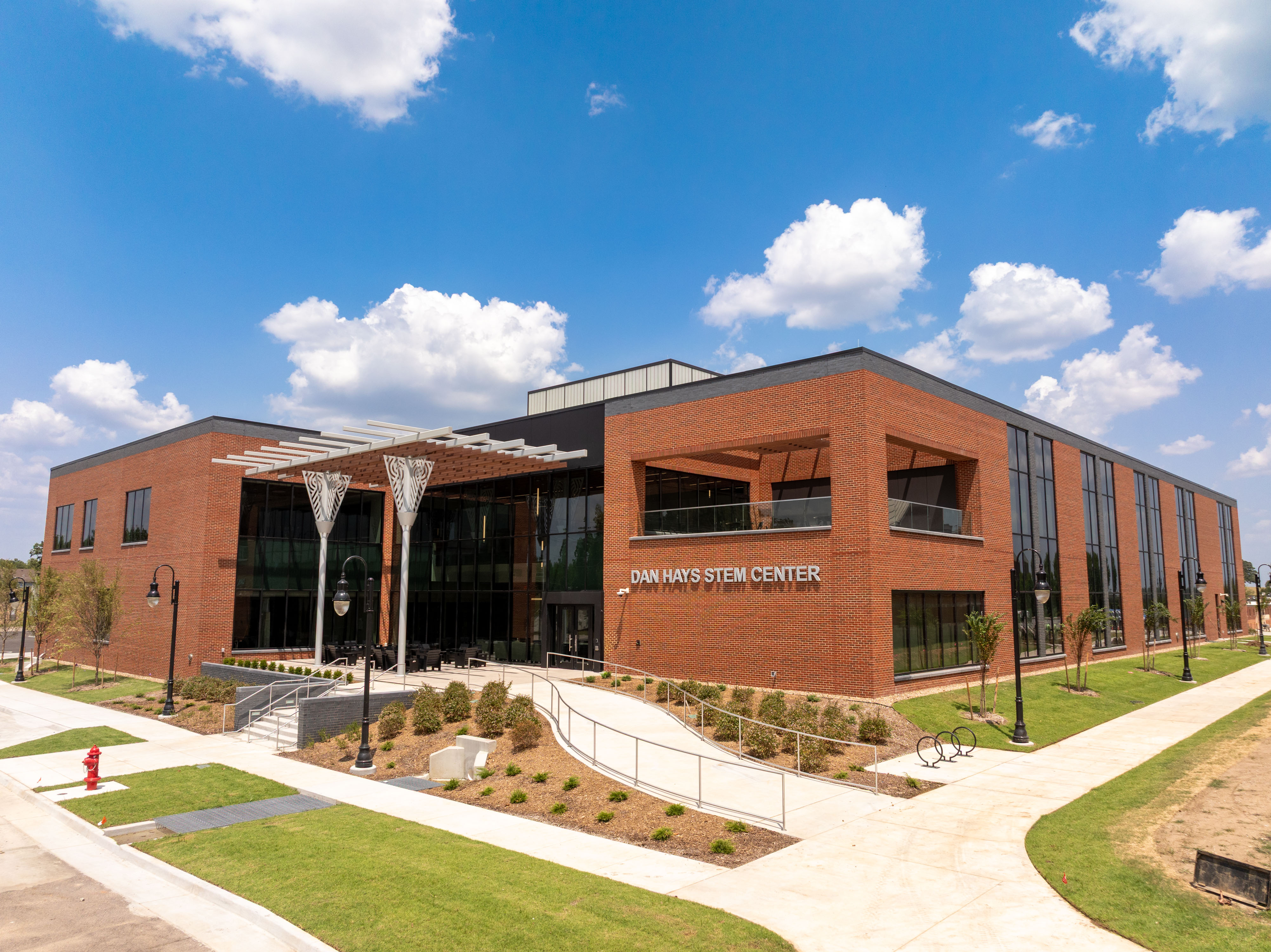
More than a century later, ECU is honoring Hays’ foundational gift with the opening of the Dan Hays STEM Center, a 64,000-square-foot facility designed to expand opportunities in science, technology, mathematics and health care while preparing students for the workforce of the future.
Named for ECU’s first patron and donor, the center represents both a connection to the university’s earliest days and a significant investment in its future.
Hays was born Sept. 7, 1874, in the Chickasaw Nation, Indian Territory, to Tom St. John and Sarah Hays. He farmed and raised livestock on his allotment throughout his life and married Benetta “Etta” Ford in December 1904.
Following approval by Oklahoma Gov. Charles N. Haskell in 1909 for three new normal schools in the state, Hays offered 16 acres of his own land as the site for the new school in Ada. His only stipulation was that he be allowed to continue living in the native-stone home he had built on the property.
That school opened as East Central State Normal School, one of Oklahoma’s original normal schools established to prepare teachers for the young state’s growing educational system.
The significance of Hays’ gift was recognized immediately.
A May 6, 1909, article in the Ada Evening News, written by Col. E. H. Lucas, praised the proposed location at the eastern end of East Main Street.
“The acceptance of the proposed site will mean that the normal school would be located in that magnificent location, avenue style, at the end of East Main Street” Lucas wrote, describing the view as one that “could not be more excellent.”
He continued, “To stand in the center of the business section of Main Street and look at the point proposed for the location on the east side must bring from anyone an involuntary expression of approval, for it is the prettiest site I ever saw.”
The school would grow and evolve with Oklahoma, eventually becoming East Central State College before achieving university status as East Central University.
Through those changes, the institution has remained connected to the community and region Hays helped establish it in more than a century ago.
Today, that legacy is visible in a new form.
Located at the corner of N. Francis Avenue and E. 9th Street, the Dan Hays STEM Center brings together academic spaces for the Department of Mathematics and Computer Science and an expanded School of Nursing. The facility provides new classrooms, laboratories, simulation spaces and areas for student collaboration and study.
The project represents a major investment in ECU’s academic facilities and in the workforce needs of Oklahoma. In 2023, ECU received $7 million in state funding associated with the American Rescue Plan Act to support expansion of its School of Nursing. That funding became an important component of the plans for the new facility.
Additional support came through the ECU Forward Capital Campaign, which launched as the Dan Hays STEM Center project was taking shape. Donors to the campaign contributed $3.3 million toward the $41 million project, helping ECU invest in students, faculty, academic programs and facilities.
In November 2025, the Tobacco Settlement Endowment Trust approved a $13 million Legacy Grant to ECU to help complete the project.
Numerous individuals, businesses and organizations also contributed to the effort, helping make the new center possible. Naming opportunities remain available for interested donors.
Groundbreaking for the Dan Hays STEM Center took place in June 2024. Just over two years later, the School of Nursing and the Department of Mathematics and Computer Science moved from Science Hall, the university’s oldest building, constructed in 1910, into their new home in time for the fall 2026 semester.
The difference is more than a new address.
The center provides flexible dry laboratory spaces that support interdisciplinary science and mathematics education, along with active-learning classrooms designed to expand and enhance existing STEM programs.
For nursing students, the building offers high- and medium-fidelity simulation laboratories equipped with advanced technology and media-capture capabilities. The spaces allow students to practice responding to realistic medical situations through interactive manikins and immersive simulations, providing opportunities to develop clinical skills in an environment designed to mirror real-world health care settings.
Classrooms are located throughout both floors of the building, while the simulation laboratories occupy a dedicated suite on the second floor. Academic and program spaces are organized around a central common area on the first floor, with additional gathering, study and work areas near the west-facing entrance on both floors.
The second floor also provides access to a covered outdoor balcony, offering additional space for students and employees to study, collaborate and gather.
The center’s design also connects the future of ECU to its history.
Throughout the building, artwork and other design elements recognize Dan Hays’ Chickasaw heritage and the longstanding relationship between ECU and the Chickasaw Nation. A large metalwork tiger sculpture, created by Choctaw artist Jane Semple Umstead, is prominently displayed between the first and second floors.
The result is a facility designed not only to support new approaches to teaching and learning, but also to reflect the history of the university and the community it serves.
When Hays donated his land in 1909, the institution that would become ECU was only beginning. East Central State Normal School was created to prepare teachers for Oklahoma, but its mission would grow along with the state and the needs of its students.
More than a century later, ECU continues that tradition of growth and service.
The Dan Hays STEM Center now stands on the campus that grew from Hays’ original gift, connecting the university’s earliest history with its next generation of students, educators, scientists, mathematicians, computer scientists and health care professionals.
And Hays’ former home, still standing in Ada, remains a tangible reminder of where that story began.
-ECU-