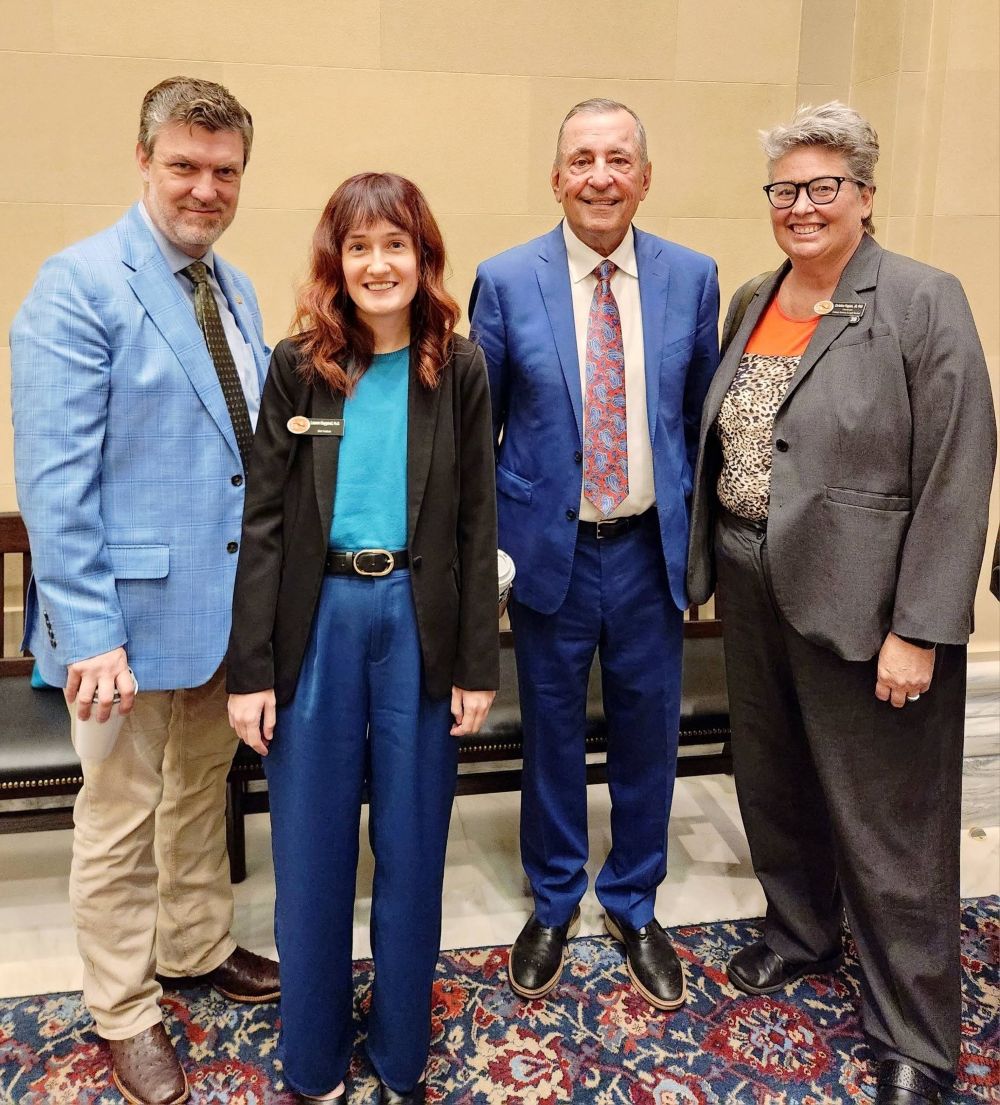
ADA, Okla. – On Sept. 8, The Oka’ Institute Director Duane Smith joined officials from the Oklahoma Water Resources Board (OWRB) to discuss the topic of water at the Oklahoma State Capitol. The occasion was an Interim Study called by Rep. Carl Newton (R-Cherokee) who is concerned with the drop in Oklahoma’s aquifers. "There's probably not anything else that's more crucial to our everyday life than water," Newton said in his opening remarks.
“The backbone of economic development is about water,” Smith said. He urged viewing water’s economic impact on an area. Quoting from the OWRB’s recent Comprehensive Water Plan, he noted that there is $24 billion needed to upgrade Oklahoma’s aging water infrastructure. In fact, by 2045, Oklahoma water providers will need to finance nearly $120 billion to sustain Oklahoma communities. They may be called on to raise water rates to fund this investment. It is calculated that with every $1 billion invested in water infrastructure, 24,000 jobs will be supported.
Smith noted that Oklahoma’s historic 1957 drought brought the creation of the OWRB. However, Oklahoma’s water law is inadequate in dealing with modern water challenges. For example, surface water is public property and ground water is private property. Oklahoma does not recognize the hydraulic connection between the two. Additionally, because Oklahoma ground water law is based on the goal of utilizing the water, the law does not recognize environmental concerns as beneficial uses. Encouraging water users to deplete their water does not create a sustainable future.
OWRB Director Julie Cunningham and Water Rights Administration Division Chief Christopher Neel both discussed the newly published Oklahoma Water Comprehensive Plan as well as new efficiency initiatives.
Tom Kimball, member of the Grand River Dam Authority (GRDA) Board of Directors, also spoke. Kimball noted – echoing a sentiment once voiced by Robert S. Kerr – “one day we will see our water more valuable than our oil.”
-ECU-