ADA, Okla. – Ada residents got a taste of water scarcity in June when a water main ruptured. Most people don’t consider where their water comes from until they turn the tap and nothing comes out. However, water users in Ada can visualize the pipeline that brings water from Byrds Mill Spring by gravity to Ada. Further, they can visualize the shape of the Arbuckle-Simpson Aquifer from which the spring flows. People in Ada are more aware of their water due to the work of the Oka’ Institute and the Water Resource Policy and Management master of science degree at East Central University.
In 2016, visionary leaders, Chickasaw Governor Bill Anoatubby and ECU President John Hargrave, created an agenda for water in Ada that would affect Oklahoma for years to come. A community development study known as the Tadzo Report revealed Ada uniquely excelled in expertise in water and that economic development could be built upon. Ada is the home to the Robert S. Kerr Environmental Research Center, known locally as Kerr Lab, a groundwater research lab that was established even before the Environmental Protection Agency was formed. Ada receives water from Byrds Mill Spring, which flows from the historic Arbuckle-Simpson Aquifer. Ada is the location of East Central University, which houses over 100 professors who can study various aspects of water and its use. Why wasn’t Ada focusing on its water? Could water become a source of economic growth?
Understanding that water is the ultimate economic development issue, together Governor Anoatubby and President Hargrave developed two joint initiatives: create a water institute and create a master of science degree in Water Resource Policy and Management.
In a 2016 press release, then ECU President Hargrave said, “It seems everything just fell into place." Along with five years of financial support from the City of Ada and the Ada Jobs Foundation (now Grow Ada), the Sciences and Natural Resources Foundation sold land to the Ada Industrial Development Authority, which donated the money to the East Central University Foundation to begin the water institute. It is named for "oka," the Chickasaw and Choctaw word for water.
To create the masters degree in Water Resource Policy Management (WRPM), Provost Katricia Pierson worked with Dr. Christine Pappas to make a proposal for an interdisciplinary degree that combines law and policy, water science and Native American topics. This unusual degree was approved by the Oklahoma State Regents for Higher Education in September of 2016. There were seven students enrolled by the end of the first semester.
Pappas is the founding director of the WRPM master of science degree and she continues in this role. She is also the Coordinator of Policy and Education for the Oka’ Institute. In the last 10 years, over 80 students have graduated from the WRPM and are employed all over the world as water planners, utility operators, teachers, grant administrators and other water-oriented careers. Three graduates have had a particularly important impact on Southeast Oklahoma. These graduates are Newakis Weber, Director of Natural Resources for the Chickasaw Nation, Ahndria Ablett, Director of Natural Resources for the Choctaw Nation, and Joseph Harris, Associate Director of the Oka’ Institute. For more information, please visit www.ecok.edu/mswrpm.
The founding Executive Director of the Oka’ Institute was Susan Paddack who concluded her service as a Senator in the Oklahoma State Legislature in 2016. While a Senator, Paddack successfully passed Senate Bill 288, a critical piece of legislation which protects the Arbuckle-Simpson Aquifer from overuse. Several communities such as Ada and Tishomingo draw drinking water from this aquifer. A former science educator, Paddack knew that her job would include educating the public about water. She also focused on pulling together partners from regulatory and economic sectors. Dr. Guy Sewell, a veteran of both ECU and the EPA's Kerr Lab, was named Research Director.
Paddack created an Advisory Board of stakeholders who worked in water but who did not have a forum to talk and collaborate. The Oka’ Institute also hosted the first Oka Sustainability Conference in its first year just months after it was founded. Staff from Kerr Lab has attended every Sustainability Conference and presented research at many of them.
Paddack led the Oka’ Institute for five years. She focused on building relationships across the state and Chickasaw Nation as well as hosting educational forums and lectures. Landowner associations such as the Lake of the Arbuckles Watershed Association and the Blue River Foundation were supported. Paddack also signed a key five-year agreement between the Oka’ Institute, the Chickasaw Nation, the Oklahoma Conservation Commission, and the Natural Resources Conservation Service to promote watershed health through best land management practices.
Paddack retired from the Oka’ Institute in 2021. Kristopher Patton, then Chickasaw Nation Director of Natural Resources, served as interim Director after Paddack's retirement. Patton was instrumental in securing an additional round of funding from the City of Ada and continuing to push the Oka’ Institute further. He was especially visionary in seeking a path for communities in the Chickasaw Nation to connect with state and federal funding for water infrastructure development.
Duane Smith was named Director of the Oka’ Institute in 2022. He brought over 40 years of experience in the water sector to the Oka Institute. Smith worked at the Oklahoma Water Resources Board from 1978 to 2010, the last 13 years as Director. In the private sector, Smith owned the consulting firm Duane Smith and Associates which worked closely with the Chickasaw Nation, the Choctaw Nation and the City of Ada.
As Director, Smith has pushed the Oka’ Institute in new directions. Today the Oka’ Institute has four main focus areas: Sustainable Communities, Research, Land Stewardship and Water Planning. Oka’s mission is to promote the use of science-based best practices for sustainable water management. The Oka’ Institute claims 30 employees among the four areas, including community specialists, scientists, geographic information system (GIS) specialists and policy experts.
Every dollar of investment in the Oka’ Institute has created strong return on investment. The Communities program has used structured engagement to connect rural Oklahoma communities including Ada to over $100 million of state and federal infrastructure grants.
The Oka Research team is leading the Arbuckle-Simpson Aquifer Phase II study which will spend $5 million over 8 years to provide water data that will lead to sustainable water use and planning. Researchers have embarked on multiple studies of wildlife habitat and ecosystem health.
The Land Stewardship team works with local landowners to promote soil health and best management practices. Leadership in area burn associations cuts red tape for landowners seeking to use the indigenous practice of prescribed burning on their land. Oka collaborated in developing the Juniper Evaluation Tool (JET) which uses GIS to identify how and where to remove harmful eastern red cedar trees.
Oka's Water Planning team creates and utilizes cutting edge research to inform water policy. Oka’ staff use GIS data to plan for drought, flood, and fire. Oka’ staff regularly publish their research and present at state and national conferences.
For more information or to reserve a seat at the John and Kay Hargrave Water Sustainability Conference, please visit www.okainstitute.org.
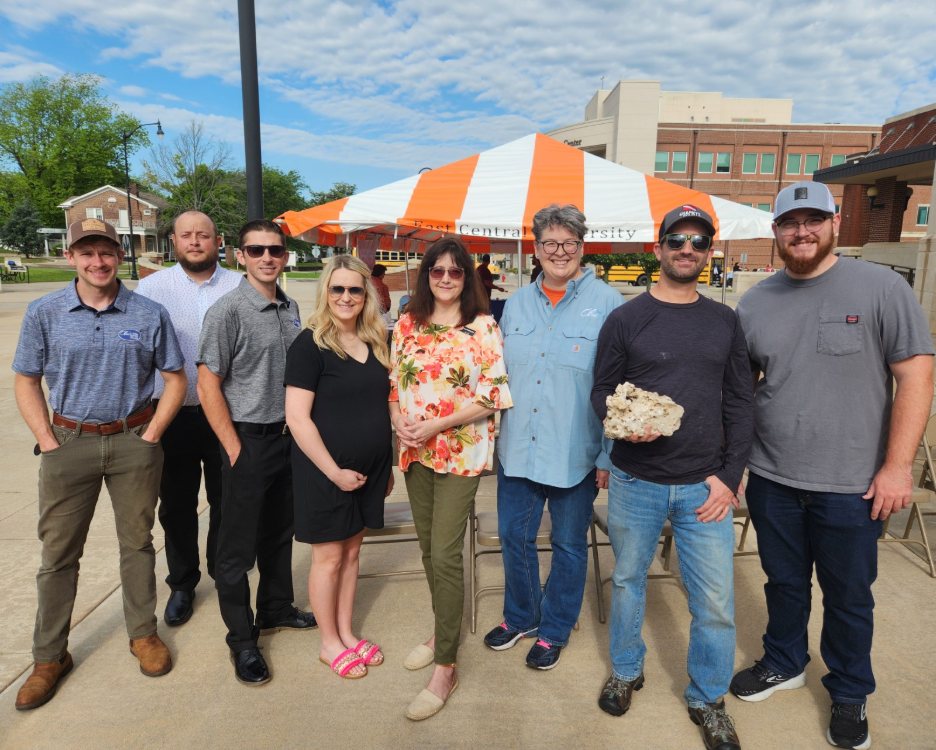
Cutline: Oka' Institute Staff attending Water Fest on the ECU Campus
-ECU-